
Watches and Film: When Horology Meets the Silver Screen
March 2, 2026
In Musings
Cinema and watchmaking share something fundamental. Both trade in detail, identity and controlled drama. A watch on screen is rarely random. It reinforces who a character is without saying a word.
The best film watch pairings do not feel like advertisements. They feel inevitable.
Over the last two decades, several brands have strengthened their cultural weight through cinema. Some placements were formal partnerships. Others were simply well chosen pieces that fit the role. Either way, the result is the same. The watch becomes part of the story.
Bond and the Modern OMEGA Era
No discussion begins anywhere other than Bond.
In No Time to Die, the Seamaster once again anchors James Bond’s wrist. OMEGA has been part of the Bond franchise since the mid 1990s, and the association has evolved from product placement into something far more embedded.
The Seamaster in modern Bond films is not just a prop. It reinforces the idea of a professional tool watch that balances refinement with durability. Titanium cases, military styling and subtle vintage cues speak to heritage while remaining contemporary.
For buyers today, that connection still resonates. The OMEGA Seamaster range carries cinematic credibility without feeling gimmicky. It remains one of the strongest examples of film reinforcing brand identity rather than distracting from it.
TUDOR and Mission: Impossible
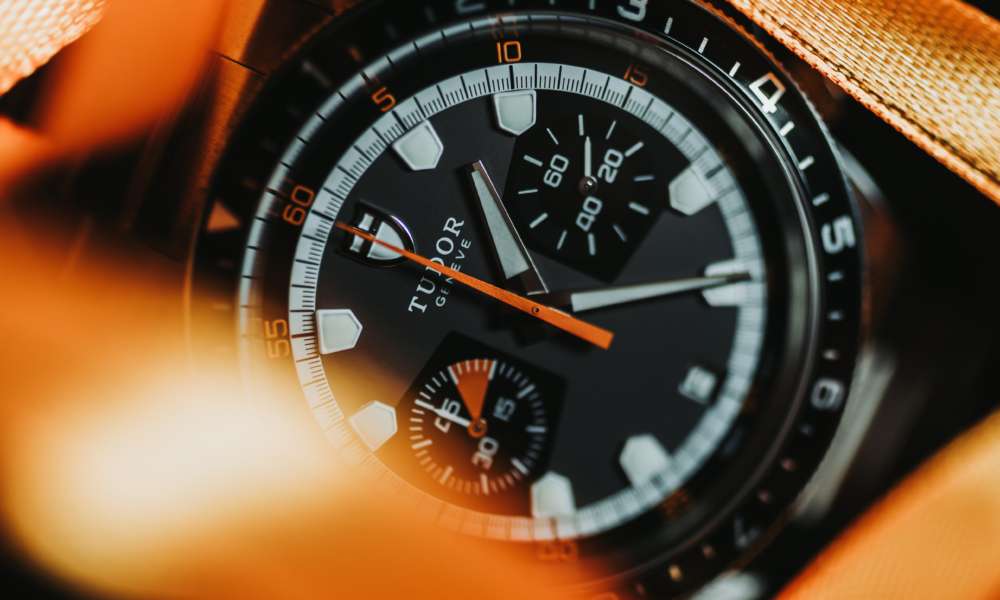
In Mission Impossible: Ghost Protocol, Tom Cruise was documented by watch media wearing a TUDOR Heritage Chrono around the film’s release period. TUDOR may not have built its identity through overt Hollywood partnerships in the same way as others, but the Heritage Chrono appearing on Cruise’s wrist was significant.
The model itself blends vintage racing cues with modern proportions. It feels robust, practical and unfussy. That aligns naturally with the Mission: Impossible tone. Precision without ostentation.
TUDOR’s wider resurgence over the last decade, particularly with the Black Bay line, has been built on authenticity. Military heritage, restrained design language and strong value positioning in the luxury space have made it one of the most compelling modern brands. Film exposure only strengthens that perception.
IWC and Top Gun
Aviation and cinema have always worked well together. In Top Gun: Maverick, the connection between flight and watchmaking is front and centre. IWC Pilot’s Watches have long drawn on military aviation heritage, and the brand’s formal relationship with the Top Gun franchise is a logical fit.
Large cases, legible dials and purposeful design make the Pilot’s Watch one of the clearest examples of a watch that matches its environment. In a cockpit, clarity matters. On screen, that clarity translates into visual strength.
Even for collectors who never intend to fly a jet, the appeal is obvious. A well executed pilot’s watch carries a certain mechanical seriousness. Film exposure amplifies that message.
Bremont and the Kingsman Aesthetic
British watchmaking rarely gets cinematic spotlight, which makes Bremont’s involvement in Kingsman: The Secret Service particularly interesting. Bremont provided watches that aligned perfectly with the tailored, understated British intelligence aesthetic of the film.
The Kingsman world is one of Savile Row suits and traditional codes of conduct. Bremont’s aviation inspired pieces sit comfortably within that framework. Solid engineering, restrained dial layouts and a sense of heritage all support the narrative.
For a British brand competing in a Swiss dominated market, cultural positioning like this matters. It reinforces legitimacy.
TAG Heuer in Modern Action
Action cinema thrives on momentum. In The Gray Man, high pace sequences are matched with sharp, contemporary styling. TAG Heuer chronographs fit naturally into that world.
TAG Heuer has always been associated with motorsport and performance timing. Chronographs are part of its DNA. In an action environment, that link to speed and precision feels coherent rather than forced.
For buyers, the appeal of a TAG Heuer chronograph often lies in that versatility. It is sporty without being fragile. Bold without being theatrical. Film reinforces those traits rather than inventing them.
Why Film Associations Matter
The key point is this. The strongest watch and film pairings feel organic.
When a watch fits the character, the setting and the tone, it gains cultural depth. That depth has commercial impact. It shapes perception long after the credits roll.
However, the watch must stand on its own merits. A weak product does not become strong because it appears on screen. The brands that endure in cinema already have credibility. Film simply magnifies it.
The Role of the Secondary Market
There is another layer here.
Cinema often highlights modern references. But the secondary market gives buyers access to earlier iterations of those same models. Vintage Seamasters, early TUDOR chronographs, discontinued TAG Heuer references and limited Bremont editions all carry their own stories.
For collectors in the UK, buying pre-owned provides access to pieces that are no longer available at retail. It also allows for more considered entry into luxury watch ownership. Depreciation curves are understood. Condition, box and papers are part of the equation. Provenance matters.
Film may spark the interest. The pre-owned market sustains it.
Cultural Longevity
The watches that succeed on screen share common traits.
They are legible.They are mechanically credible.They are rooted in heritage.They are not designed solely for attention.
That is why certain brands continue to appear in major productions. They project reliability. They communicate character without shouting.
For a collector, that alignment between culture and craftsmanship is compelling. A watch that carries cinematic history but remains grounded in horological substance has lasting appeal.
Film does not define a watch. It enhances one.
When a timepiece fits its role, it becomes part of a broader cultural memory. Bond’s Seamaster. A TUDOR on a mission. A pilot’s watch in a fighter jet. A chronograph in an urban chase.
These moments reinforce what serious collectors already understand. The right watch tells a story. Cinema simply gives that story a wider audience.
Share this Story