
At a glance, writer-director Ehrland Hollingsworth’s Dooba Dooba comes across as a lost shot-on-shiteo affair. As if that wasn’t bad enough, its title recalling a family-friendly show brings to mind the wretchedness of Skinamarink. Are first impressions correct, and the filmmaker’s third feature-length effort is a disaster? Or is there some value to be found in this horror offering somewhere?
Amna (Amna Vegha) is a young woman with a passion for singing. But she’s got to pay the bills, so she accepts an unusual babysitting gig. Wilson (Winston Haynes) and Taylor (Erin O’Meara) are going out to a party and will be gone all night, thus Amna is babysitting their daughter, Monroe (Betsy Sligh). While 16 years old, Monroe is terrified of being home due to the murder of her brother a decade ago. Her PTSD from the event means she cannot be home alone, and whenever someone, parents included, is walking from one room to the next, they need to yell “dooba dooba” so Monroe knows who it is.
After going through all the rules, Wilson and Taylor leave. Amna bides her time until Monroe feels safe enough to emerge from her room. The babysitter and her charge’s initial interaction is awkward because Monroe looked up Amna on social media. But it isn’t long before the two are playing truth or dare and having a good time. However, every so often, Monroe loses her mind, such as when she punches Amna. The security cameras throughout the house capture everything that happens. But why are there cameras everywhere, and who are they there to truly protect?
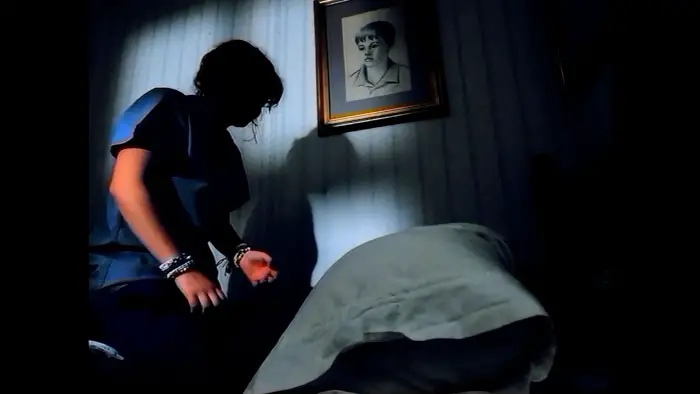
A late-night babysitting shift turns uneasy in Dooba Dooba (2026).
“…every so often, Monroe loses her mind, such as when she punches Amna.”
Dooba Dooba intersplices the main narrative with commercials or public domain footage (from movies and shows). In fact, one of these interstitials opens the found-footage title and gives off a real cheap vibe. But as the story plays out, the importance of these interruptions becomes apparent. Hollingsworth clearly thought through when, where, and how to place these clips, and they add a lot to the overall experience.
Admittedly, it takes two or three of these commercial breaks to really understand their import and use. This means that one’s first time watching this 75-minute horror picture is broken up and not fully immersive until about 30 minutes in. Also, the big twist is easy to guess. Seriously, within minutes of every main character being introduced, the truth is very obvious. To be fair, there’s a second twist that is a little more shocking.
But the film overcomes those issues thanks to its atmosphere and acting. Hollingsworth creates an uneasy feeling from the first scene with Amna at the front door and an unseen man speaking. It just feels off, and that feeling never dissipates. Vegha veers from scared to confident to loving with ease. She shares good chemistry with Sligh, which heightens the ever-growing tension. For her part, Sligh remarkably goes from an average if shy teen to an overly hyper and sometimes violent person with scary intensity. When Monroe asks Amna not to hate her, the scene is played with such sincerity that everyone watching feels bad for both characters.
Dooba Dooba is, thankfully, not a plodding, pointless mess of a story that idiots will call great for no reason (anyone who liked Skinamarink can kindly go f**k themselves). Hollingsworth has used his limited resources and natural talent to deliver an engaging and creepy ride. The cast is great, especially Vegha and Sligh, who craft realistic, believable characters. The editing is precise, though it interrupts the plot if the audience isn’t properly prepared for it on first viewing. Overall, the director proves he has what it takes to scare cinephiles, and he got a cast just as creepy as his plot.
For more information, visit the Dooba Dooba Dark Sky Films page.